
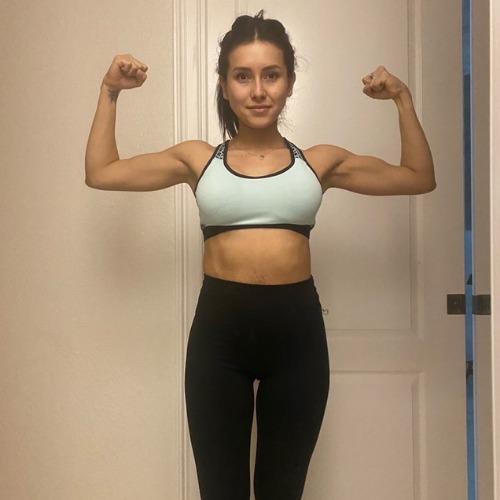
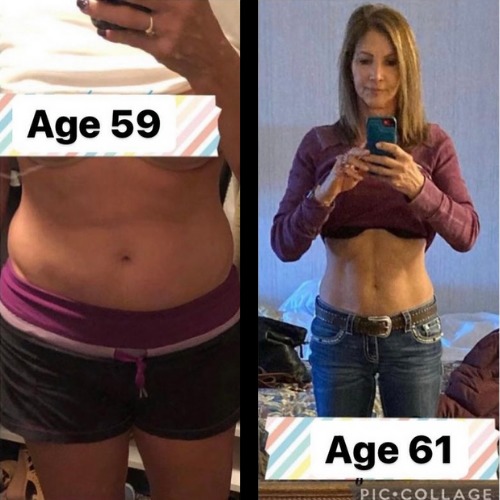
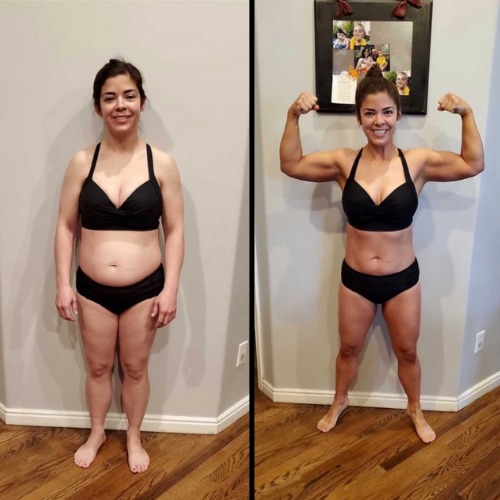
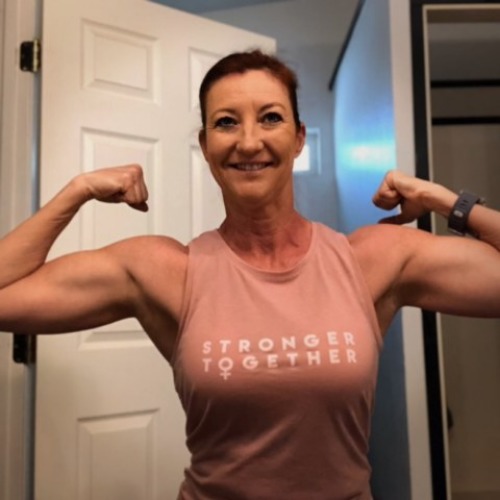
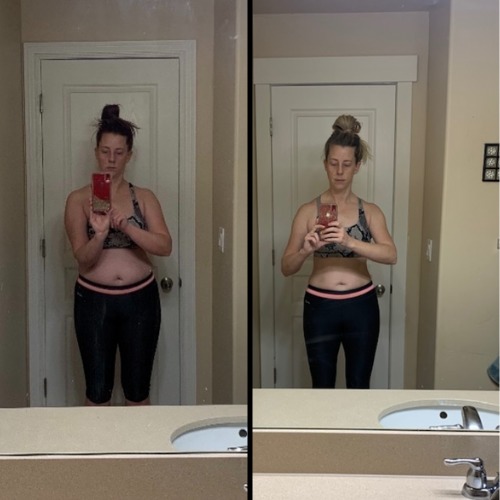
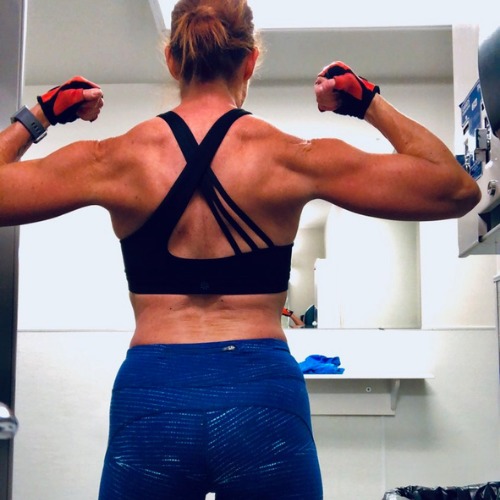
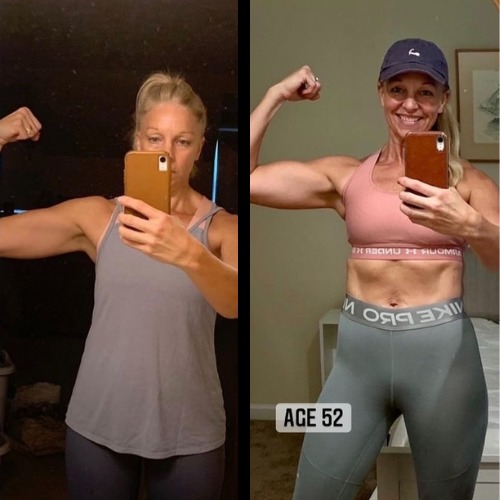
You’re not stuck. No matter where you’re starting, change is possible when you follow a plan that meets you where you are in this chapter of your life.
This is your time to feel better in your body.
To move with confidence.
To like what you see in the mirror again.
⬇️ Below are three different ways to get started. Each is designed to support you based on where you are right now and how much time, energy, and support you need.

These guides are perfect if you’re looking for a small, manageable place to start that feels simple and helps you build confidence as you go.
You’ll get lifetime access to one-week workout guides you can repeat as often as you’d like:
• Follow-along HIIT cardio workouts
• HOME or GYM strength workouts
Each guide also includes short educational videos that teach you how to move safely, choose weights, understand protein and calories, and feel confident doing the workouts.
This option is great if you want a small, manageable starting point with no monthly commitment, just guidance you can use forever.
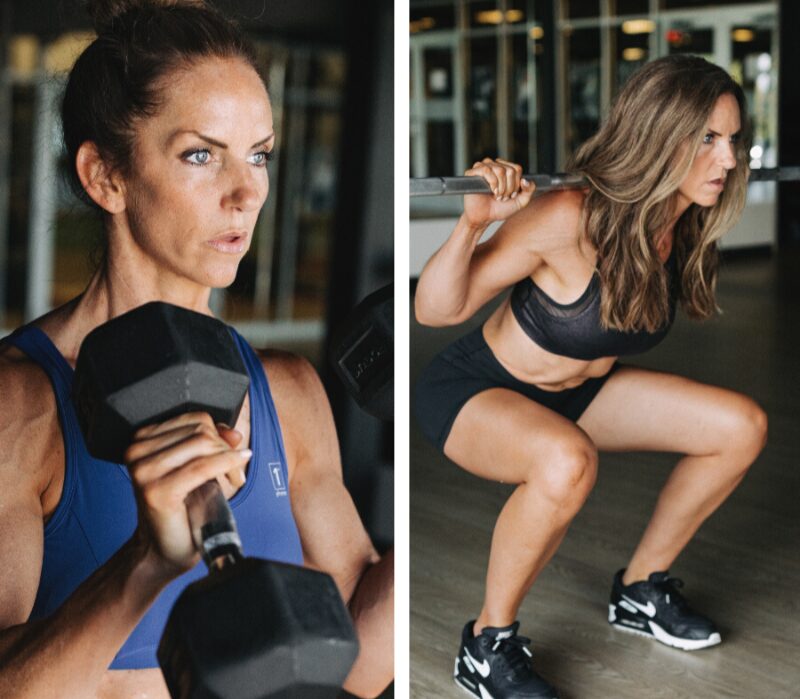
This option is for women who want to feel more confident in how they eat and workout, without having to figure it all out on their own.
You’ll get:
• HOME or GYM workouts inside my monthly app for all fitness levels
• Customized macros and meal plans
This is a great fit if you like having a plan to follow, want to train on your own schedule, and the confidence of knowing you’re doing the right things on your own.
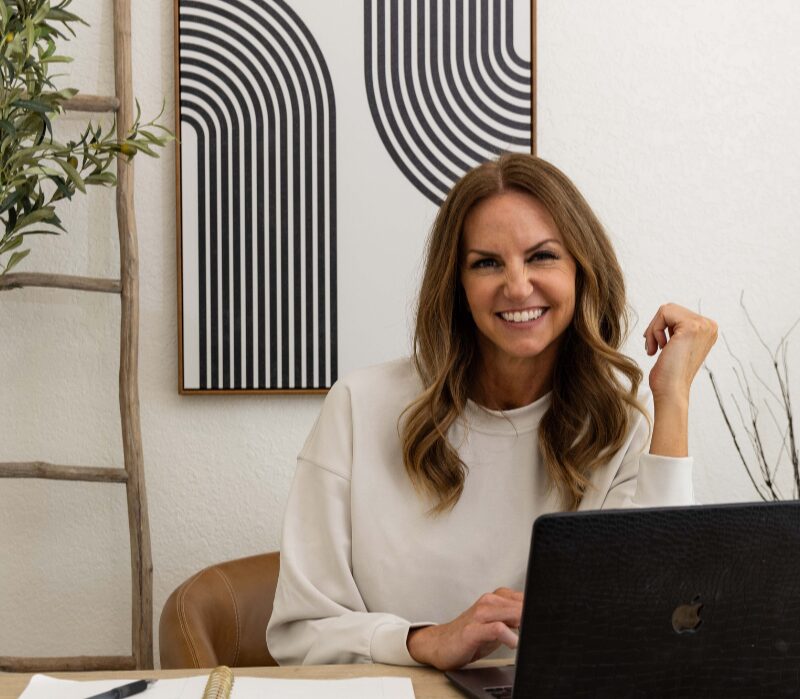
This program is for women who are tired of feeling uncomfortable in their body, struggling with baby or menopause weight, and being hard on themselves and are ready for real support.
We work together weekly for 12 weeks, diving into:
• Your workouts, inflammation & bloating, food, and habits
• Your mindset, self-talk, and expectations
• Why you do what you do and how to change it
This is hands-on, deeply personal coaching where nothing is left to guesswork. It’s for women who want accountability, clarity, and support through every step of the process.
You don’t need to do everything at once.
You don’t need to be perfect to make progress.
You don’t need to wait until life slows down.
You just need to start in a way that makes sense for you.
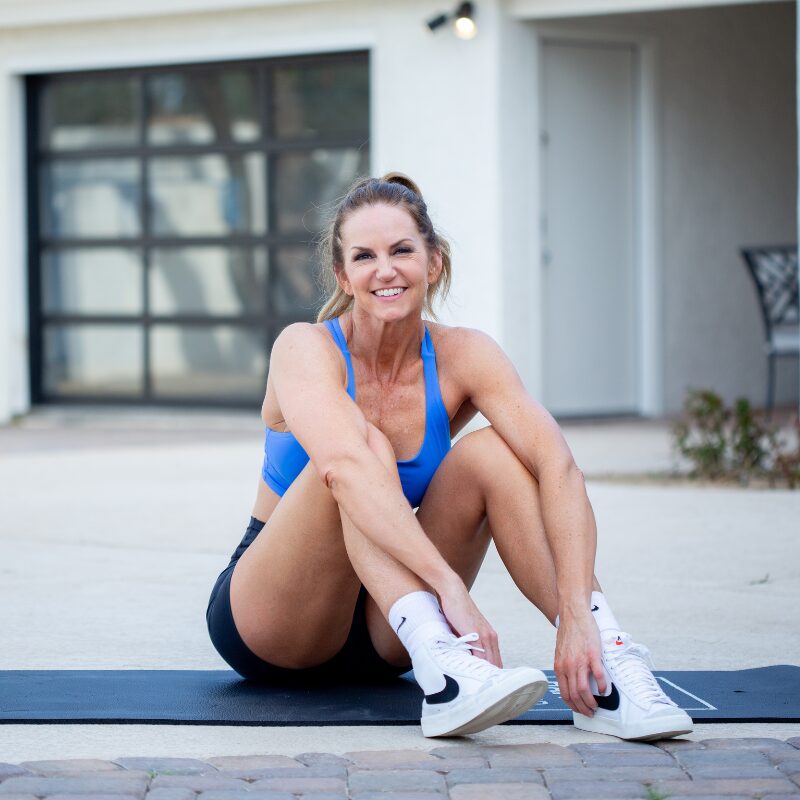
I didn’t start my journey until my late 30s with no background, no experience, and no idea where to begin. If you see your story in mine, I’m here to support you as we explore what works for your body and why you do the things you do, building confidence with realistic expectations along the way.

❌ Not seeing results
❌ Feeling overwhelmed
❌ Not feeling like yourself
✅ In just one hour, you’ll walk away knowing exactly where to focus next.
❌ Not seeing results
❌ Feeling overwhelmed
❌ Not feeling like yourself
✅ In just one hour, you’ll walk away
knowing exactly where to focus next.
Almost there! Please complete this form and click the button below to complete registration.

This form collects information we will use to send you updates about promotions, special offers, and news. We will not share or sell your personal information. You can unsubscribe at any time. Privacy Policy
Scientifically speaking, a calorie is a unit of energy. It is a measure of energy expenditure and stored energy. Simply put, a calorie measures the amount of energy in the food and drink that we consume. Energy balance is the relationship between energy in (food calories taken into the body through food and drink) and energy out (calories being used in the body for our daily energy requirements). This relationship determines whether weight is lost, remains the same, or gained. Energy balance is so much more that just a change in body weight though. It has to do with what’s going on in your cells. It can impact your metabolism, hormones, and your mood – so how you feel everyday. Our caloric intake comes from macros or macronutrients, which are protein, carbs and fat. Our bodies need calories (fuel) to function at an optimum level.
If you want to lose weight, you need to track your calories. Plain and simple. You might be surprised by how much you are eating. When weight loss is your goal, you will reduce your calories by 500 fewer calories than your body needs to maintain your current weight. This will help you lose about 1 lb of body fat per week. To see results, you should aim to be within 5 grams under or over your goal daily calorie/macro goal.
To be in a calorie deficit means that you are eating fewer calories than you are burning; thereby putting your body into a calorie deficit. This is ideal for losing weight, burning some fat, and leaning out.
Being on maintenance calories means you are roughly eating the same amount of calories as you are burning each day. This keeps you in a state of maintaining your current physique.
Eating in a surplus means you are eating more calories than you are burning. This is meant to build muscle. But know, also, that you will most likely gain some fat as well while eating in a surplus.
The term “macros” is short for the word “macronutrients.” Macronutrients are the essential nutrients that our bodies need to survive. There are three different macronutrients: protein, fat, and carbohydrates. You will focus on these three if you decide to become a “macro counter”. Your body needs all three of the macros to function properly. I often hear women say, “I can’t eat protein because it will make me bulky like a dude.” False. “I can’t eat fats because they will make me fat.” False. I can’t eat carbs because they are bad for you.” False. You need a minimum amount of each macro to function at an optimum level.
The general rule of thumb is to take your daily calorie goal and do a 30-35-35% macro split between your protein, carbs and fats. You have to remember that everyone’s body has different needs. I suggest starting at a certain macro number and then evaluating after 2 weeks. How are your energy levels? Are you less or more irritable? Are you bloated? Are you sleeping better? Have you seen a loss of body fat? These are questions that will help you determine if your macros are set at the right percentages. Your protein percent will never change, but you can try a higher carb or a higher fat percentage to see if your body responds better to one or the other.
Fat is essential. Remember in the 1980s when it was thought that weight loss was achieved by eating “fat free”? Fat will not make you fat! Our bodies need fat for so many important body processes. Making hormones properly, protecting our brains, and protecting our organs are a few of our body’s uses for fat. Obviously there are better sources than others when it comes to fat. Nuts, seeds, olive oil, and ghee butter reign supreme. In my experience, most women do not eat enough healthy fats. A woman needs a minimum of 40 grams of fat a day. Each gram of fat contains 9 calories.
Protein is the building block of our muscles, and helps them to repair, maintain, and to grow. If you want to see muscle growth, you must hit your daily protein goal! The more muscle you have, the more efficiently your metabolism will burn, which means you can eat more food! That’s right, you can eat MORE! You burn more calories digesting protein than you do carbs and fats. Protein also keeps you full longer, so you are less likely to overeat on snacks later. Almost every diet out there calls for protein, and there are many reasons for that. Protein also helps stabilize blood sugar (P.S. this is the secret to weight loss) and builds and repairs hair, skin, and nails. It also prevents muscle loss with age. You need 1 gram of protein per day per lb of goal body weight. Each gram of protein contains 4 calories.
Carbohydrates are also essential. Think of them as the gas in your tank. Carbs are our main energy source (unless you are in ketosis), and are our quickest source of energy. On average, a woman needs a minimum of 100 g of carbs a day. Carbs are in beans, grains, vegetables, and fruits. Carbs are broken into two categories: simple and complex. Simple carbohydrates are quickly digested and absorbed by the body which is why you feel hungry within 30 minutes of consuming them. They are broken down quickly by the body to be used as energy. You’ll find them naturally in foods such as fruits, milk, and milk products. They are also found in processed and refined sugars such as candy, table sugar, syrups, and soft drinks. Complex carbohydrates are higher in fiber and more nutrient dense which means they’ll take longer to digest and why you can feel full for up to 4 hours after consuming them. Fiber and starch are the two types of complex carbohydrates. Fiber is especially important because it promotes bowel regularity and helps to control cholesterol. Each gram of carbohydrates contains 4 calories.